


Skip the Setup: Launching Umbraco 13 Websites Faster with OskiStarterKit
Every new Umbraco project starts the same way. Before anyone writes a line of content, the team has to create users, configure the database, deploy packages, and set up the base structure. Then editors find they can’t see their changes without publishing, menus are hard-coded, and SEO fields are forgotten until launch day. OskiStarterKit was built to remove this first stage completely.
What OskiStarterKit is
OskiStarterKit is a ready-to-use starter package for Umbraco 13, developed by SoftPro. It works directly inside the Umbraco backoffice. Right after installation, developers and content editors get a pre-configured website structure and the essential tools, so there is no repetitive setup to go through.
The package includes:
ready-made templates
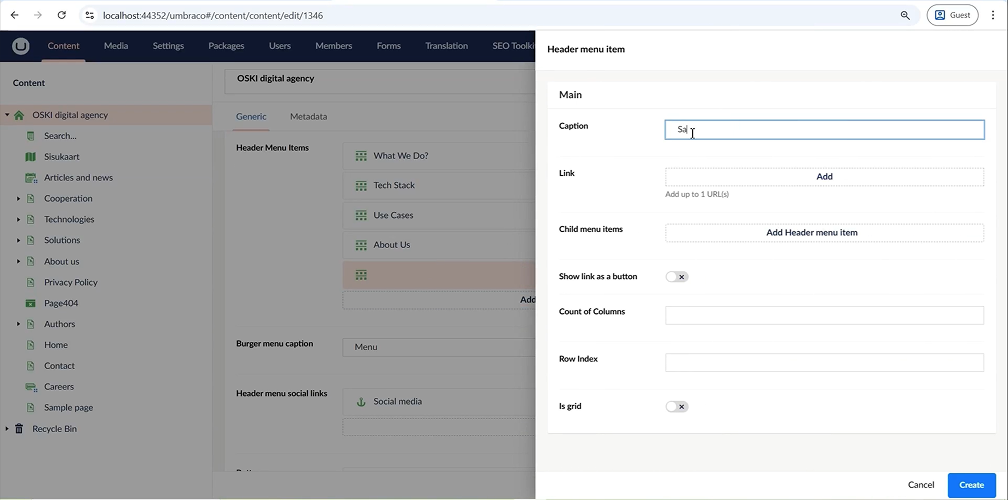
a flexible navigation system
SEO configuration tools
SMTP settings with email testing
built-in 404 and 500 error pages
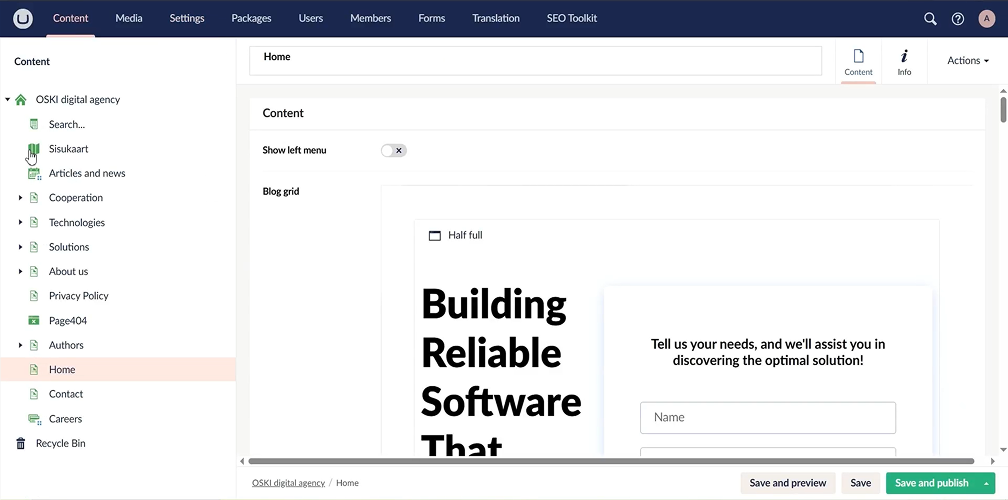
At its core is the Block Grid Editor with live preview. Teams build page layouts visually from reusable content blocks, without writing code.
Where Umbraco projects usually lose time
Setup: the same installation and configuration steps repeat on every new site.
Editing: changes have to be published before editors can see how a page looks.
Layouts: fixed templates don’t adapt to different types of websites.
Navigation: nested menus are hard-coded or difficult for editors to manage.
SEO: metadata and canonical URLs end up inconsistent or missing at launch.
Dependency: non-technical users need developer help for everyday content tasks.
Hire SoftPro for Umbraco Development
Contact SoftPro to discuss your Umbraco project. Partner with them to launch faster with OskiStarterKit or build custom features tailored to your goals.
How the kit solves it: three layers
Layer 1: Instant project foundation. Installation is automated into one onboarding flow. It generates the starter project structure and configuration out of the box. SMTP settings with email testing and the 404 and 500 error pages are ready from day one.
Layer 2: Visual, block-based editing. The block-based content architecture combines prebuilt page templates with modular, reusable blocks. It is flexible enough for corporate sites, content platforms, and small business websites. Live preview in the Block Grid Editor syncs every editor action with front-end rendering, so changes appear instantly without publishing.
Layer 3: Editor-managed structure and SEO. A dynamic multi-level navigation system lets content managers create and reorder nested menu items directly in the backoffice. The integrated SEO Toolkit adds structured fields to every page for meta titles, descriptions, canonical URLs, and other search settings.
Technology
Platform: Umbraco 13
Backend: .NET, ASP.NET Core, C#
Frontend: Razor templates, Block Grid Editor
Database: SQL database
Email: SMTP
SEO: SEO Toolkit
Industry: Umbraco CMS
Focus: Rapid website setup
Released: 2025
Measured impact
70% faster time to launch. Less time passes from installation to a fully working website, including module setup, page creation, and readiness for content.
50% faster page creation. Editors build, structure, and publish pages with the Block Grid Editor on their own.
80% content editor independence. Pages, layouts, navigation, and publishing stay in editors’ hands.
100% SEO configuration completion. The SEO Toolkit keeps meta titles, descriptions, and canonical URLs consistent across all pages.
Getting started
OskiStarterKit is available on the Umbraco Marketplace. It suits teams starting a new Umbraco 13 project who want a working foundation instead of an empty backoffice. Projects that need more than a starter kit, such as custom features, integrations, or a full build, can be discussed with SoftPro's development team, which builds web solutions tailored to business needs.
Conclusion
OskiStarterKit turns the slowest part of every Umbraco 13 project into a single installation step. Automated setup, block-based layouts with live preview, editor-managed navigation, and a built-in SEO Toolkit let developers launch faster and give editors independence from the first day.


