


Going Multilingual Without the Spreadsheet: AI Translation in Umbraco with umContentTranslator
The decision is made: the website needs a German version by next quarter. Then the real work begins. Content gets exported page by page, files go back and forth with translators, someone pastes the results into Umbraco, and a few weeks later nobody can say for sure which pages are fully translated and which still show last year’s text. Every content update starts the whole cycle again.
Why multilingual Umbraco sites get out of sync
Translation is rarely the hardest part. The real trouble comes from everything around it:
Manual transfer: content moves between the CMS and translation tools by hand.
Broken structure: raw HTML or JSON sent to a translation service comes back damaged.
Over-translation: product codes, technical fields, or brand terms get translated when they shouldn’t be.
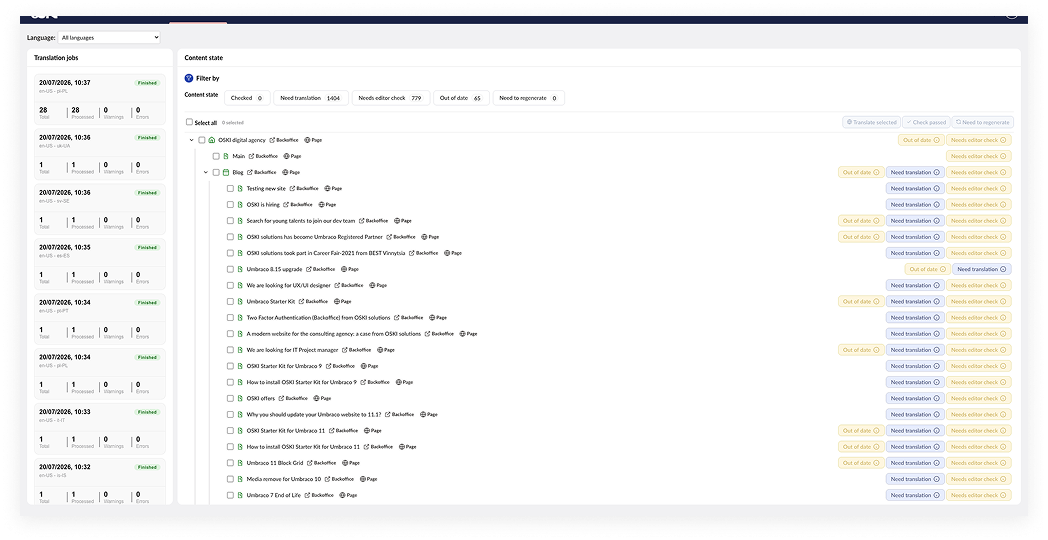
No overview: editors can’t see which pages are translated, outdated, or missing in each language.
What umContentTranslator does
umContentTranslator is an AI-powered localization plugin for Umbraco CMS, developed by SoftPro. It lets teams translate and manage multilingual content directly in the CMS. Translation workflows are automated, so creating and maintaining a multilingual website takes much less time and effort. The plugin also shows the localization status of every page, and its flexible architecture supports multiple AI providers and models.
Hire SoftPro for Umbraco Development
Contact SoftPro to discuss your multilingual Umbraco project. Partner with them to automate localization and build CMS features tailored to your goals.
How it works: prepare, translate, track
Stage 1: Prepare the content
Clean text processing. Before translation, content is split into clean text fragments. The AI never receives raw Umbraco HTML or JSON, so its output is more accurate and the original structure stays intact.
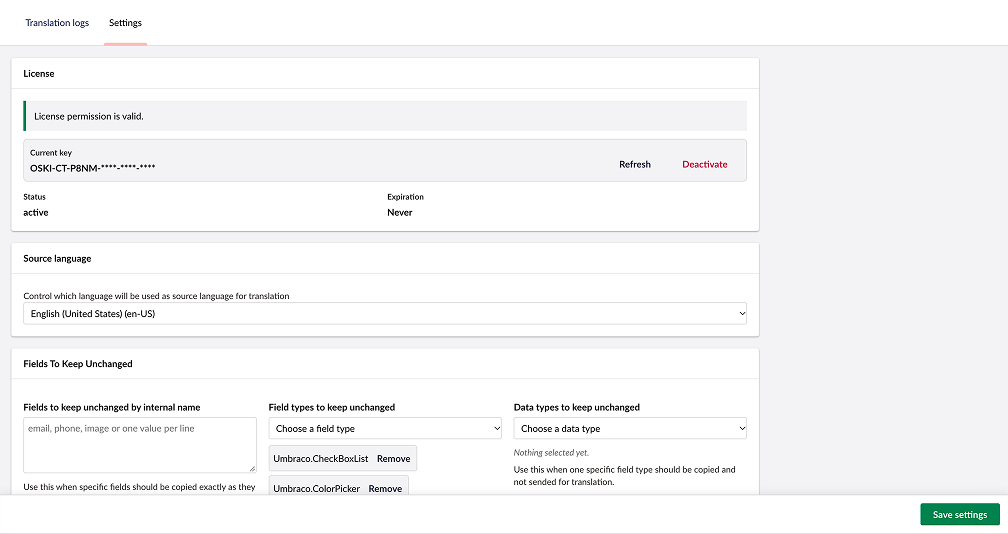
Exclusion rules. Blacklist rules and property controls keep specific properties and content types out of the translation process.The numbers behind the platform.
Stage 2: Translate with the AI you choose
Multiple providers. A unified integration layer connects to OpenAI and Anthropic Claude, with custom configuration support.
Model switching. Teams can switch models depending on what matters for a given task: quality, speed, or cost.
Ready for new providers. A provider-based architecture with clear abstraction layers lets new AI providers connect without changes to the core.
Stage 3: Track localization progress
A translation status dashboard shows localization progress across the whole site, including which pages are translated, outdated, or still missing. Teams keep full control over every language version.
Technology
Backend: C#
Frontend: Lit
CMS: Umbraco CMS
AI: OpenAI API, Anthropic Claude API
Architecture: provider-based architecture, AI content processing pipeline, modular plugin system
Industry: Umbraco CMS
Focus: AI-powered localization
Released: 2026
Thr numbers
75% faster localization: less time to translate, adapt, and publish multilingual content.
60% less editorial workload: far less manual effort on repetitive translation tasks.
35% better coverage visibility: a clear view of what is translated, outdated, or pending review.
50% faster multilingual launches: new language versions go live sooner.
A checklist for launching a new language version
Set exclusion rules first. Mark the properties and content types that must stay in the original language, such as codes, technical fields, and brand names.
Choose a model for each task. Use higher-quality models for key landing pages and faster, lower-cost ones for large volumes of secondary content.
Translate in sections, not all at once, and review the most visible pages before publishing.
Use the status dashboard as your to-do list. Work through outdated and missing pages until coverage is complete.
Recheck after every content update, because a page updated in the source language is outdated in every other language.
umContentTranslator is available on the Umbraco Marketplace. Installation takes minutes and requires no changes to core code. For projects that need more than translation, such as custom AI features, integrations, or a full multilingual build, SoftPro’s development team creates Umbraco solutions tailored to your setup.
Conclusion
Running a multilingual Umbraco site no longer has to mean exports, spreadsheets, and uncertainty. umContentTranslator brings the whole process into the CMS:
content is cleaned before it reaches the AI;
exclusion rules protect what shouldn’t be translated;
teams can choose between OpenAI and Claude models by quality, speed, or cost;
a status dashboard shows exactly where every language stands.


