


One Person, One Record: How a Replaced Department Silos with a Unified CRM
A teenager joins a youth program. A few years later, she enrolls in a campus program, and later still she becomes a donor. To the organization, this is one long relationship. To its databases, she was three strangers.
This was the reality at the Orthodox Union, a non-profit running many programs under one roof.
The organization
The Orthodox Union’s programs include:
NCSY for teens
JLIC on college campuses
Yachad for people with disabilities
the Impact Accelerator for other non-profits
advocacy campaigns
programs in Israel, among others
Over the years, each department built its own system, so the same person could be stored in several databases and no one had the full picture.
Why separate systems stopped working
No complete picture. Records were duplicated across departments, so no one could see a person’s full history with the organization.
Legacy systems everywhere. MARS, the Yachad API, the Impact Accelerator platform, and a separate background-check app each held years of data and daily workflows.
Sensitive data at stake. Combining records meant one database would hold medical details for youth and inclusion programs. Each department still had to see only its own records.
Too much manual work. Approvals, confirmations, reminders, and thank-you messages were mostly handled by hand.
The architecture: three layers
In 2025–2026, the development company SoftPro to consolidate these systems into one platform. It is organized in three layers:
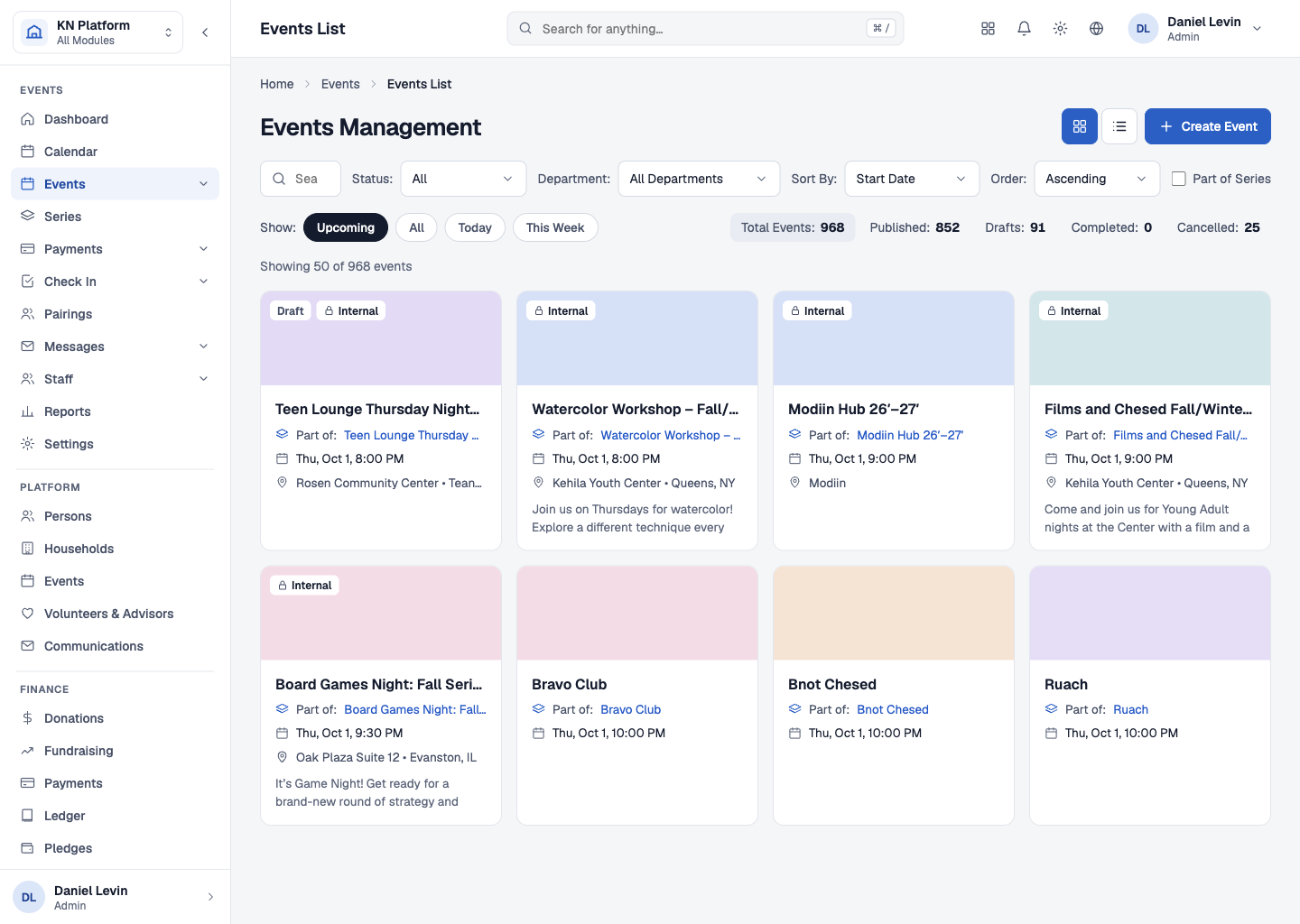
Staff web application. Departments work in their own spaces, with their own screens and access rules.
API. It powers the application and contains the business logic.
Embeddable widgets. Event registration, payments, and applications run on the organization’s public websites.
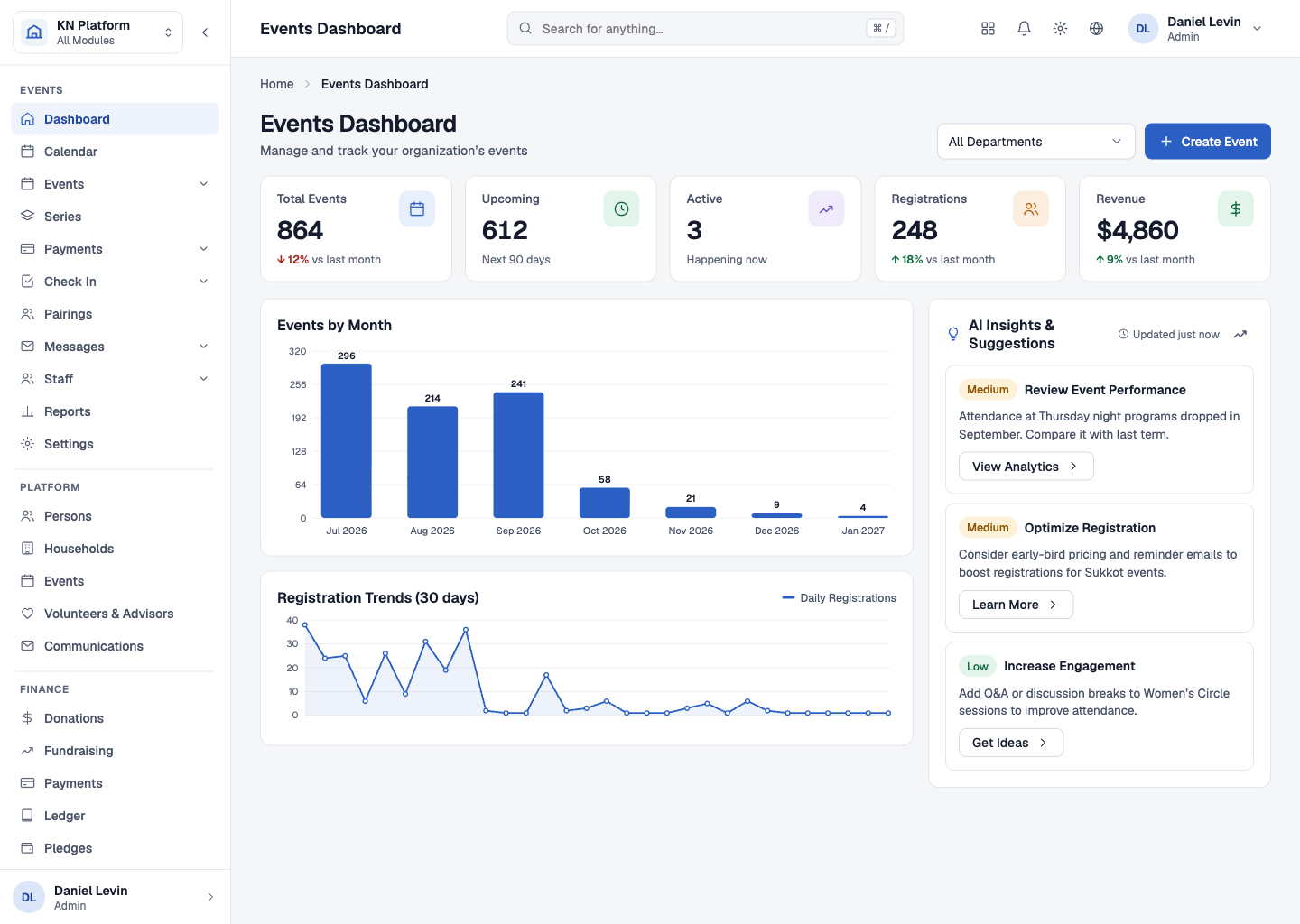
At the center is one record for each person and household. It holds their whole history with the organization: programs, events, family, donations, and communication.
Hire SoftPro for CRM Development
Contact SoftPro to discuss your CRM and data consolidation needs. Partner with them to plan and build one secure platform that keeps every team’s workflows intact.
Six design decisions that made it work
Shared records, department layers. Each department adds its own data on top of a common person and household record. Duplicate records are detected and merged.
A feature-by-feature migration. Every legacy feature was mapped to a new place, workflows were rebuilt in the CRM, and dedicated import tools moved existing data across.
Privacy in the data layer. Department isolation filters every request automatically. Access rules, consent tracking, and audit trails were designed with HIPAA requirements in mind.
Modules with clear boundaries. Every department was developed in the same codebase at the same time. Each department area is a separate module, checked automatically on every change, so work on one is much less likely to break another.
Widgets for the public. A short snippet embeds a widget on any website. Sign-in is passwordless through an emailed link, and registrations and payments go straight into the CRM.
Event-driven automation. A new registration, payment, or other change triggers ready-made workflows for approvals, confirmations, reminders, and thank-you messages.
Technology stack
Backend: Node.js, Express, oRPC, Zod
Frontend: Vue 3, TypeScript, Tailwind CSS, shadcn-vue, TanStack Query, TanStack Table, Storybook
Data: PostgreSQL (Amazon Aurora), Prisma ORM, ClickHouse
Widgets: Web Components (Vue)
Authentication: Okta, Amazon Cognito
AI: Amazon Bedrock (Claude), Google Gemini
Cloud and delivery: AWS, Docker, Kubernetes, Helm, GitHub Actions
Integrations: SendGrid, Amazon SES, Zoom, JotForm, Checkr, Congress.gov, the organization’s payment gateway
Where the project stands
Systems replaced. The CRM replaces MARS, the Yachad API, the Impact Accelerator platform, and a stand-alone background-check app.
Scale. The platform includes 40+ feature modules covering youth, campus, inclusion, Israel, advocacy, events, fundraising, payments, staff, and volunteers. These run on 480+ database tables, 40+ API areas, and 70+ automated workflows.
Public widgets. Widgets for event registration, payments, advocacy campaigns, and advisor applications are ready to embed.
Privacy built in. Department isolation applies to every request, alongside consent tracking and audit trails.
Rollout plan. Departments go live one at a time, each first tested by a small group of real users. Full rollout is planned for the end of 2026.
Lessons for multi-program organizations
The OU case shows that bringing data together and keeping departments independent can work in one system. The key is to design for both from the start: a shared core record, isolation at the data layer, and modular code. Organizations planning a similar move can talk to SoftPro teama bout how to approach it.
Conclusion
The Orthodox Union went from many disconnected systems to one platform, where every person has one record and every department sees only what it should. Legacy workflows have been rebuilt, public websites feed data directly into the CRM, and routine messages run on their own. Departments are being moved over one at a time ahead of a full launch planned by the end of 2026.


